
Coccidiosis remains one of the most significant challenges in modern poultry production. This widespread parasitic disease, often referred to as poultry coccidiosis or avian coccidiosis, is caused by protozoan parasites of the genus Eimeria. These Eimeria infections in poultry affect the intestinal tract and can severely compromise bird health, welfare, and performance.
For poultry producers, mastering the control of coccidiosis in chickens is not only about treating disease but about implementing a comprehensive and sustainable strategy that protects flock performance while supporting long-term intestinal health.
The Biology of Eimeria and Intestinal Damage
Coccidiosis is caused by several Eimeria species in poultry, including Eimeria acervulina, Eimeria maxima, Eimeria tenella, Eimeria necatrix and Eimeria brunetti. Each species targets specific parts of the intestine and causes varying degrees of intestinal epithelial damage.
The infection begins when birds ingest sporulated oocysts, the infective stage of the parasite, from contaminated environments such as litter, feed, or water. Once inside the host, these oocysts release sporozoites, which invade intestinal cells and undergo multiple replication stages, producing merozoites. This cycle leads to rupture of intestinal cells and therefore extensive tissue damage, eventually causing the release of new oocysts in the litter and, further re-contaminating the environment.
This continuous cycle explains why coccidiosis in poultry can spread rapidly within a flock, especially under conditions of high stocking density, poor litter management, and elevated humidity that favor oocyst sporulation and shedding.
Impact on Poultry Performance and Production
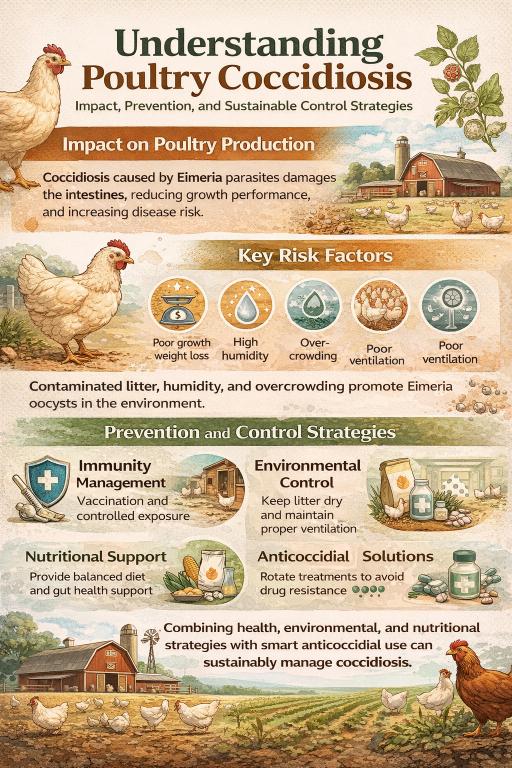
The consequences of poultry intestinal parasites like Eimeria go far beyond visible clinical signs. Even subclinical infections can significantly reduce production efficiency.
Key impacts include:
- Poor growth and weight loss due to impaired nutrient absorption
- Reduced absortion of pigmentation in chickens
- Diarrhea, often linked to disruption of intestinal health
- Increased feed conversion ratio (FCR), meaning birds require more feed to grow
- Reduced weight and growth uniformity within the flock
- Greater susceptibility to secondary infections
In broiler, layer and breeder production, these effects translate directly into economic losses. Subclinical Eimeria infection in poultry is particularly insidious, as it may go unnoticed while continuously affecting performance.
Risk Factors and Disease Dynamics
Understanding the environmental and management factors that influence coccidiosis is essential for effective control.
The main risk factors include:
- Contaminated litter, which serves as the primary reservoir of oocysts
- High humidity, promoting oocyst survival and sporulation
- Poor ventilation and inadequate litter management
- High stocking density, increasing exposure pressure
- Inadequate biosecurity measures
Because oocysts are highly resistant in the environment, complete elimination is unrealistic. Instead, the goal is to manage exposure and support the development of controlled immunity.
Recognizing Clinical and Subclinical Coccidiosis
Early detection of coccidiosis in chickens is key to minimizing its impact.
Common clinical signs include:
- Diarrhea (sometimes with blood, depending on the Eimeria species)
- Lethargy and reduced activity
- Decreased feed intake
- Poor growth performance
- Ruffled feathers
However, subclinical coccidiosis is often more economically damaging. Birds may appear healthy but still suffer from intestinal epithelial damage, leading to reduced nutrient absorption and overall performance.
Monitoring tools such as lesion scoring, performance tracking, and oocyst shedding analysis are essential to assess infection levels and guide control strategies.
Toward Sustainable Control of Poultry Coccidiosis
Modern poultry production requires a balanced and sustainable approach to avian coccidiosis control. Rather than relying solely on treatment, integrated strategies aim to manage infection pressure while preserving bird health and performance.
1. Controlled Exposure and Strong Immunity
As said on https://poultry.ceva.com/, coccidiosis control is not about eliminating Eimeria, but about managing exposure to allow birds to develop protective immunity.
Programs such as vaccination strategies can:
- Stimulate strong, long-lasting immunity
- Restore sensitivity of field Eimeria to anticoccidial drugs
- Reduce reliance on continuous medication
- Improve long-term flock resilience
This approach aligns with modern expectations for sustainable poultry production.
2. Environmental Management
Controlling the environment is the first line of defense:
- Maintain dry litter to reduce oocyst sporulation
- Optimize ventilation to control humidity
- Regularly manage and refresh litter
- Reduce contamination through strict hygiene protocols
These measures directly limit the buildup of infective sporulated oocysts.
3. Nutritional Support and Gut Health
A strong intestinal environment helps birds better cope with Eimeria infection in poultry.
Nutritional strategies may include:
- Balanced diets supporting gut integrity
- Feed additives that promote intestinal resilience
- Solutions targeting microbiota balance
Supporting gut health reduces the severity of intestinal coccidiosis in poultry and improves recovery.
4. Strategic Use of Anticoccidial Solutions
Anticoccidial programs remain an important tool, but their use must be optimized.
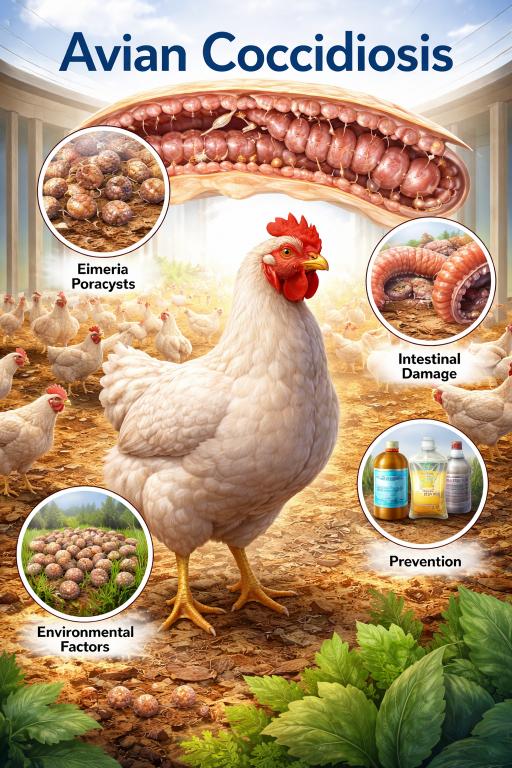
Understanding the environmental and management factors that influence coccidiosis is essential for effective control.
Different solutions target various stages of the parasite lifecycle and help control oocyst shedding and intestinal damage. However, improper use can lead to resistance.
Best practices include:
- Rotating programs to maintain efficacy
- Combining solutions with strong management practices
- Monitoring performance and adjusting strategies accordingly
An integrated approach ensures effective control while preserving long-term efficiency.
A Holistic Approach to Coccidiosis Management
Today, controlling poultry coccidiosis requires more than a single solution. It involves combining:
- Immunity management
- Environmental control
- Nutritional strategies
- Smart anticoccidial drugs use
This holistic approach helps reduce the impact of Eimeria in poultry, limits economic losses, and supports sustainable production systems.
Coccidiosis remains a complex and unavoidable challenge in poultry industry. Caused by multiple Eimeria species, this disease affects intestinal health, bird welfare, and production efficiency.
However, with the right strategy, its impact can be effectively controlled. By focusing on building immunity, protecting intestinal health, managing environmental risk factors like contaminated litter and humidity, and implementing integrated control programs, poultry producers can significantly reduce the burden of avian coccidiosis.
Ultimately, success lies in shifting from a reactive approach to a proactive and sustainable management strategy; one that ensures optimal performance while maintaining long-term flock health.