

The digital transformation is reshaping dental education, bringing advanced procedures such as subperiosteal implants within reach for practitioners worldwide.
With the increasing complexity of managing severe bone atrophy and the emergence of custom implant solutions, a key question arises: can clinicians truly develop expertise in subperiosteal implantology through online learning ?
Exploring this evolution highlights how e-learning is not only expanding access to knowledge, but also becoming directly connected to real clinical workflows in modern implant dentistry.
The evolution of implantology education
For decades, mastering surgical protocols in dental implantology relied on traditional formats—classroom lectures, hands-on workshops, and mentorship programs. While effective, these approaches often required significant travel, time away from practice, and limited access to leading experts.
Today, digital technologies are transforming this landscape. E-learning platforms now provide structured, expert-led programs that mirror real-world clinical protocols. Rather than simply delivering theoretical knowledge, they are increasingly designed to support clinicians in implementing advanced treatment strategies in their daily practice.
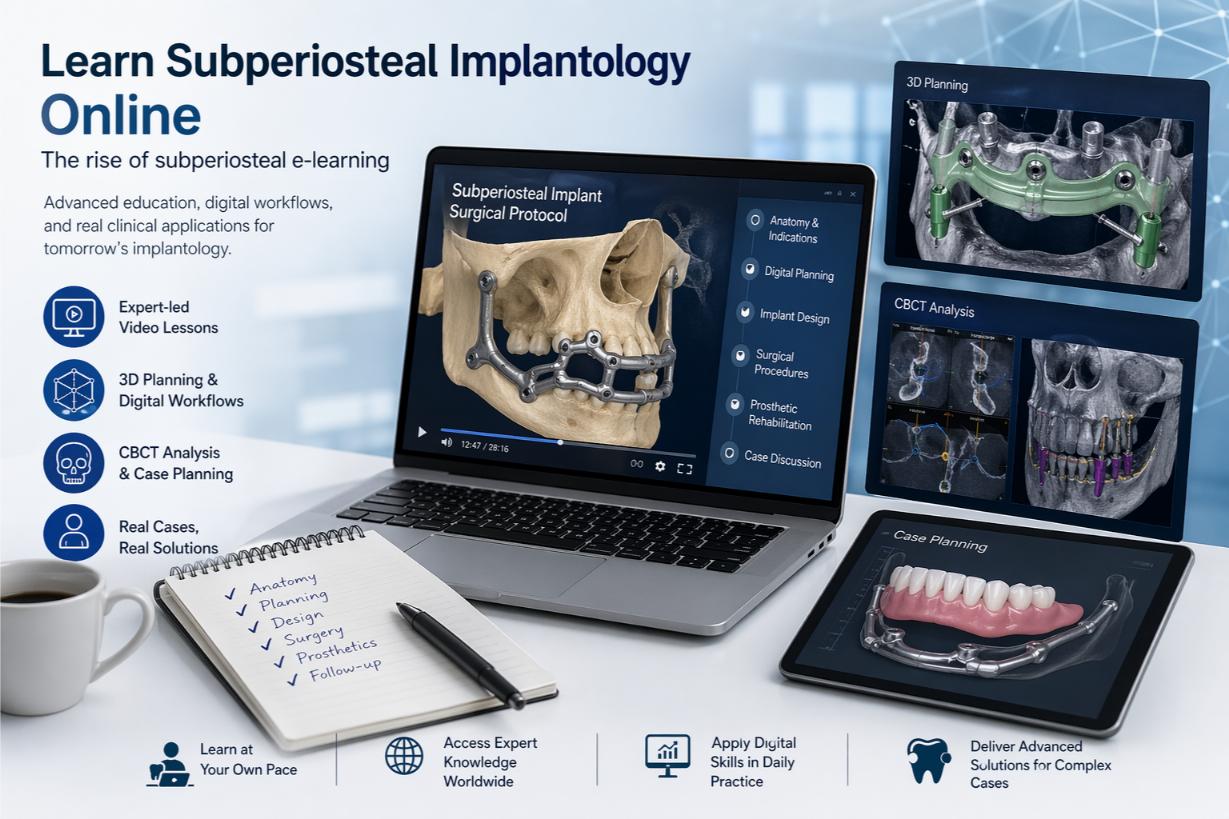
In the field of subperiosteal implantology, this shift is particularly relevant. As custom implants and digital workflows become standard, training must evolve accordingly. Websites such as https://www.subperiosteal.com/ illustrate this transition, combining digital education with clinically applicable methodologies tailored to complex full-arch rehabilitation.
Why is e-learning gaining momentum in subperiosteal implantology ?
Several factors explain the rapid growth of online education in this field. The rise of digital treatment planning and patient-specific implant design naturally aligns with new learning formats that emphasize flexibility, precision, and clinical applicability.
Flexibility and accessibility of online courses
E-learning enables practitioners to integrate training into their clinical schedules. Whether reviewing anatomical principles, prosthetic planning, or surgical techniques, clinicians can progress at their own pace while maintaining their practice.
This accessibility also opens the door to international expertise. Clinicians can learn from experienced implant specialists and thought leaders without geographical constraints, gaining exposure to advanced approaches in managing severe atrophy and complex cases.
Integration of digital and practical skills
Modern e-learning goes far beyond passive learning. High-quality programs integrate:
- Step-by-step surgical demonstrations
- Digital planning exercises based on real patient data
- CAD/CAM workflows and 3D design tutorials
- Interpretation of CBCT and DICOM datasets
These elements are not isolated educational tools : they are directly aligned with real clinical workflows. The goal is clear: enable practitioners to transition from learning to implementation, particularly in the design and placement of patient-specific subperiosteal implants.
Some programs also include virtual simulations and guided case planning, reinforcing both decision-making and complication management in realistic scenarios.
What does a typical subperiosteal e-learning pathway involve ?
A comprehensive online training pathway combines foundational science with applied clinical workflows. Rather than separating theory and practice, it integrates them into a cohesive learning experience.
Typical components include:
- Interactive modules on craniofacial anatomy and patient selection for severe atrophy
- Digital planning sessions focused on custom implant framework design
- Tutorials on DICOM processing and 3D modeling software
- Video-based surgical walkthroughs, including periosteal management and fixation techniques
- Case-based discussions covering complications and troubleshooting
- Live webinars or forums for feedback and peer interaction
Importantly, many programs are designed to reflect actual treatment protocols used in advanced implantology. This ensures that clinicians are not only acquiring knowledge, but also developing the ability to apply it in real patient cases.
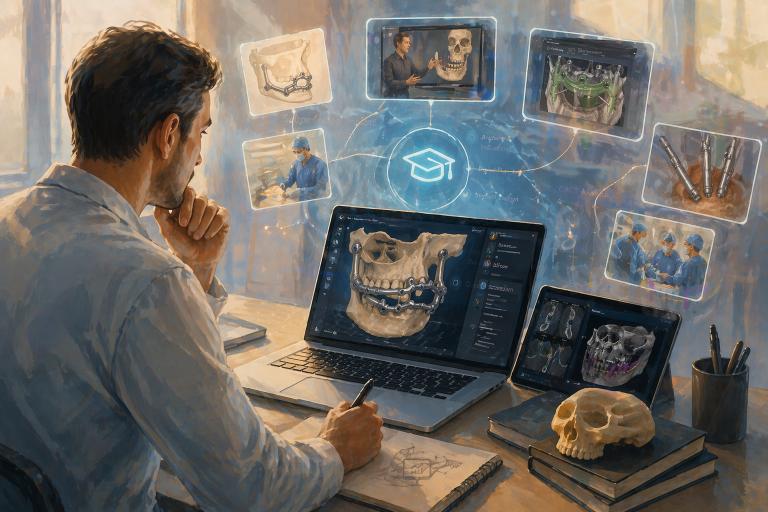
Can You Master Subperiosteal Implantology Online? Exploring the Rise of Digital Training
Hybrid formats are also emerging, where online preparation is complemented by optional hands-on sessions ; bridging the gap between digital learning and surgical execution.
Challenges and opportunities with fully online training
Despite its many advantages, e-learning alone cannot fully replace hands-on surgical experience. Procedures such as subperiosteal implant placement require tactile precision, spatial awareness, and intraoperative decision-making that are best developed under supervision.
However, technological advancements are rapidly narrowing this gap. High-definition surgical videos, interactive planning tools, and remote mentorship are significantly enhancing the realism and effectiveness of online training.
More importantly, e-learning plays a critical role in preparing clinicians before they ever enter a surgical environment. By mastering digital workflows and understanding procedural steps in advance, practitioners can approach clinical cases with greater confidence and efficiency.
Preparing for the future of digital implant education
The future of implantology lies at the intersection of digital innovation and accessible education. Subperiosteal implantology, in particular, benefits from this convergence ; combining patient-specific design, advanced manufacturing, and increasingly sophisticated training methods.
As clinicians face more complex reconstructive challenges, the demand for flexible, expert-driven education will continue to grow. E-learning is no longer just an alternative : it is becoming an essential component of professional development in implant dentistry.
Ultimately, the most effective approach is a blended one: combining autonomous digital learning, expert guidance, and clinical validation. This model not only enhances knowledge acquisition but also supports the implementation of advanced, patient-specific solutions ; helping clinicians treat cases that were once considered untreatable.