
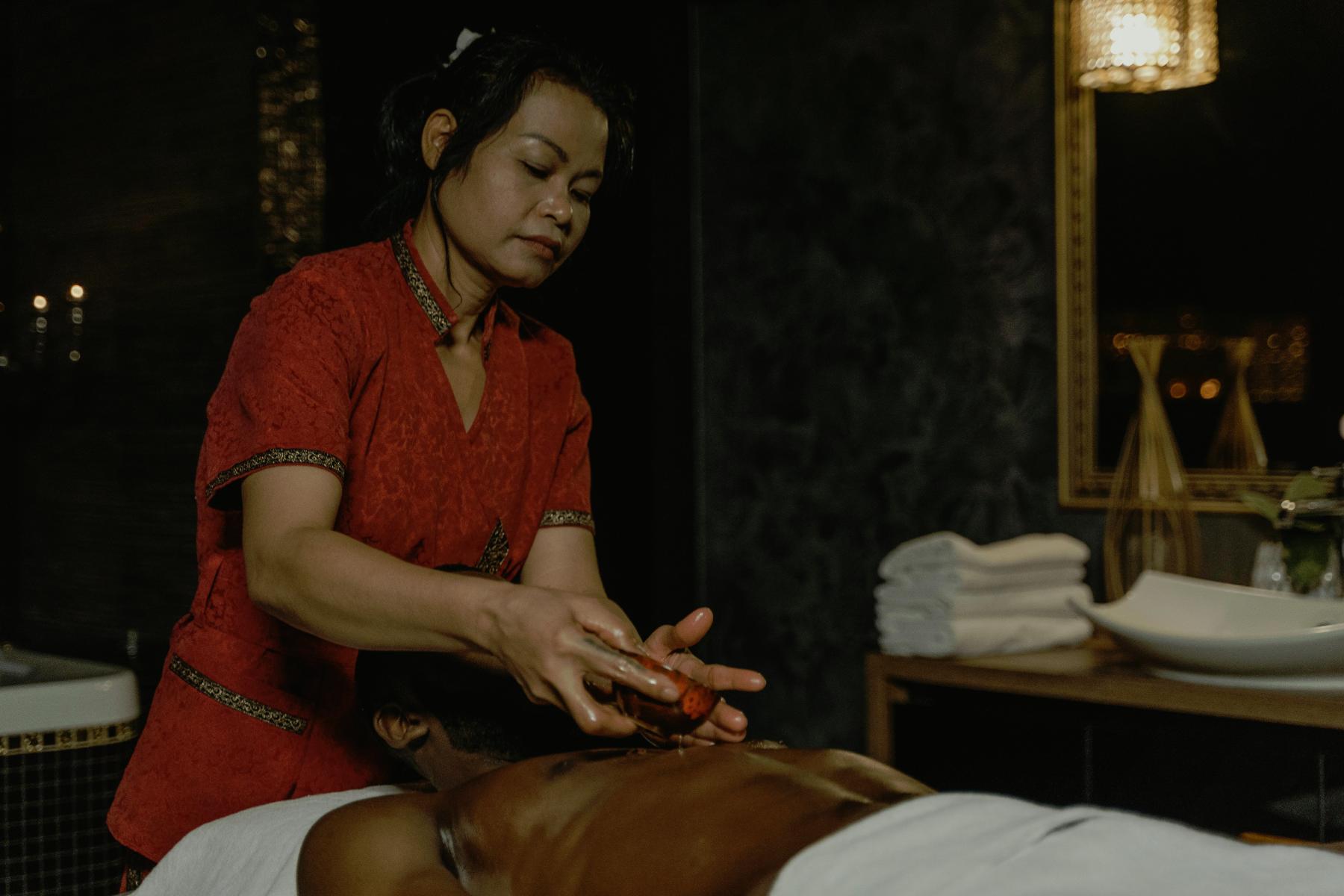
In today’s fast-paced world, finding effective ways to relax and restore balance has become essential. Among the many wellness practices available, Thai massage stands out as a unique and deeply transformative experience. Rooted in ancient traditions, it combines physical techniques and holistic principles to promote both physical and mental well-being.
But beyond its reputation for relaxation, Thai massage offers a wide range of benefits that go far beyond a simple moment of rest.
- 1 A Traditional Practice Focused on Energy and Balance
- 2 Deep Muscle Relaxation and Tension Relief
- 3 Improved Flexibility and Mobility
- 4 A Powerful Stress-Relief Experience
- 5 Enhanced Circulation and Detoxification
- 6 Skin Nourishment and Sensory Benefits
- 7 A Personalized and Adaptable Experience
- 8 Wellness Ritual
- 9 A Lasting Sense of Well-Being
A Traditional Practice Focused on Energy and Balance
Thai massage is not just about muscles : it is a holistic therapy designed to rebalance the body’s energy. Unlike Western massage techniques that mainly focus on muscle manipulation, Thai massage works along energy lines using pressure, stretching, and rhythmic movements.
This approach aims to restore harmony within the body, helping to release blocked energy and improve overall vitality. The combination of acupressure and assisted stretching creates a dynamic experience that is both energizing and deeply calming.
In many modern wellness spaces inspired by traditional techniques, this philosophy is still central, offering treatments designed to reconnect body and mind in a meaningful way.
Deep Muscle Relaxation and Tension Relief
One of the most immediate and noticeable benefits of thai massage is its ability to relieve muscle tension. Through a combination of firm pressure, stretching, and targeted movements, it helps release tight areas and improve flexibility.
This type of massage can be particularly beneficial for:
- People with sedentary lifestyles
- Individuals experiencing chronic tension
- Athletes recovering from physical strain
The use of hands, elbows, and sometimes even knees allows practitioners to apply deep, precise pressure that reaches muscles more effectively than many traditional techniques.
As a result, the body feels lighter, more flexible, and significantly less tense after a session.
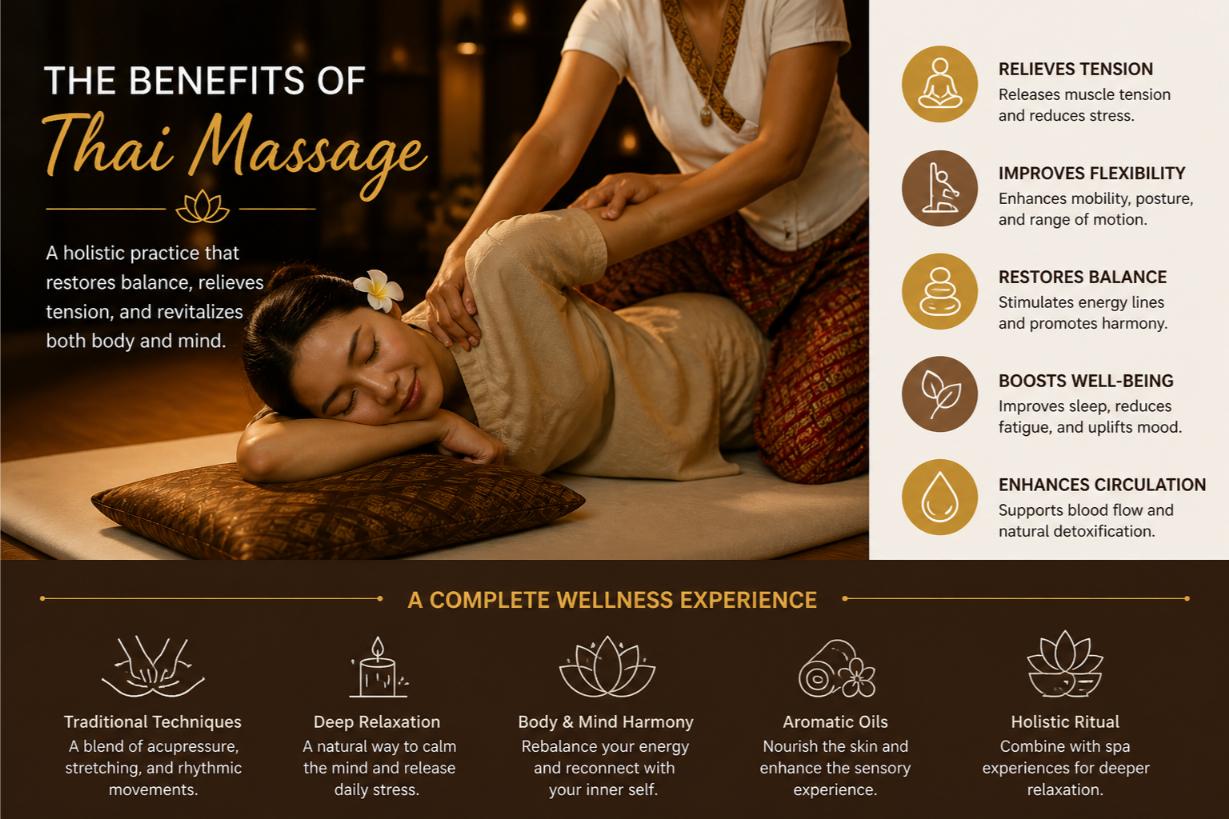
Thai massage benefits: improve relaxation, flexibility and well-being
Improved Flexibility and Mobility
Thai massage is often described as “passive yoga” because it incorporates assisted stretches that gently guide the body through a range of movements.
These stretches help to:
- Increase joint mobility
- Improve posture
- Reduce stiffness
Over time, regular sessions can contribute to better overall flexibility, making everyday movements easier and more comfortable.
This is one of the reasons why Thai massage is appreciated not only for relaxation but also for its functional benefits on the body.
A Powerful Stress-Relief Experience
Stress has become a constant in modern life, affecting both mental and physical health. Thai massage provides a powerful way to disconnect and reset.
The combination of rhythmic movements, controlled breathing, and a calming environment creates a state of deep relaxation. Many people report feeling mentally lighter and more centered after a session.
Experiences offered in dedicated wellness environments (such as those described on https://sokharoyalspa.com/en) often enhance this effect by combining expert techniques with a soothing atmosphere and personalized care.
This immersive approach allows clients to fully disconnect from external stress and focus on their well-being.
Enhanced Circulation and Detoxification
Another key benefit of Thai massage is its positive impact on circulation. The pressure applied during the session stimulates blood flow, helping oxygen and nutrients reach tissues more efficiently.
At the same time, the combination of massage and stretching supports the body’s natural detoxification processes. Some treatments may also be complemented by additional wellness practices such as hammam or sauna sessions, which further promote toxin elimination and muscle relaxation.
This dual effect contributes to a feeling of renewal and physical lightness after each session.
Skin Nourishment and Sensory Benefits
While traditional Thai massage is often performed without oil, modern variations frequently incorporate aromatic oils to enhance the experience.
These oil-based treatments offer additional benefits:
- Deep hydration of the skin
- Improved elasticity
- Enhanced sensory relaxation
The combination of touch, scent, and warmth creates a multi-sensory experience that goes beyond physical relief. It becomes a moment of complete immersion where the body and mind can truly unwind.
Some variations, such as oil-based Thai massage, combine traditional pressure techniques with fluid movements, offering both intensity and comfort.
A Personalized and Adaptable Experience
One of the strengths of Thai massage lies in its adaptability. Each session can be tailored to individual needs, whether the goal is deep relaxation, muscle recovery, or energy revitalization.
Professional practitioners adjust:
- The intensity of pressure
- The focus areas
- The rhythm of the session
This personalized approach ensures that each treatment is unique and aligned with the client’s expectations.
High-quality wellness centers often emphasize this customization, ensuring that every session feels both effective and comfortable.
Wellness Ritual
Thai massage is often part of a broader wellness ritual rather than a standalone treatment. Many people choose to combine it with complementary experiences such as body scrubs.
These combinations enhance the overall benefits:
- The body is prepared through heat and relaxation
- The massage becomes more effective
- The experience feels more complete and immersive
This holistic approach transforms a simple massage into a true wellness journey.
A Lasting Sense of Well-Being
Perhaps the most valuable benefit of Thai massage is the lasting feeling it creates. Beyond the immediate relaxation, it promotes a deeper sense of balance and well-being.
After a session, many people experience:
- Reduced stress levels
- Improved sleep quality
- Greater body awareness
This makes Thai massage not just a moment of comfort, but a meaningful practice for long-term wellness.
Thai massage is much more than a traditional therap : it is a complete approach to well-being that combines physical techniques, energy work, and sensory relaxation.
From relieving muscle tension to improving flexibility and reducing stress, its benefits are both immediate and long-lasting. Its adaptability and holistic nature make it suitable for a wide range of needs, whether you are looking to relax, recover, or simply reconnect with yourself.
In a world where stress and fatigue are increasingly common, taking the time to experience such a practice can make a real difference, both for the body and the mind.