
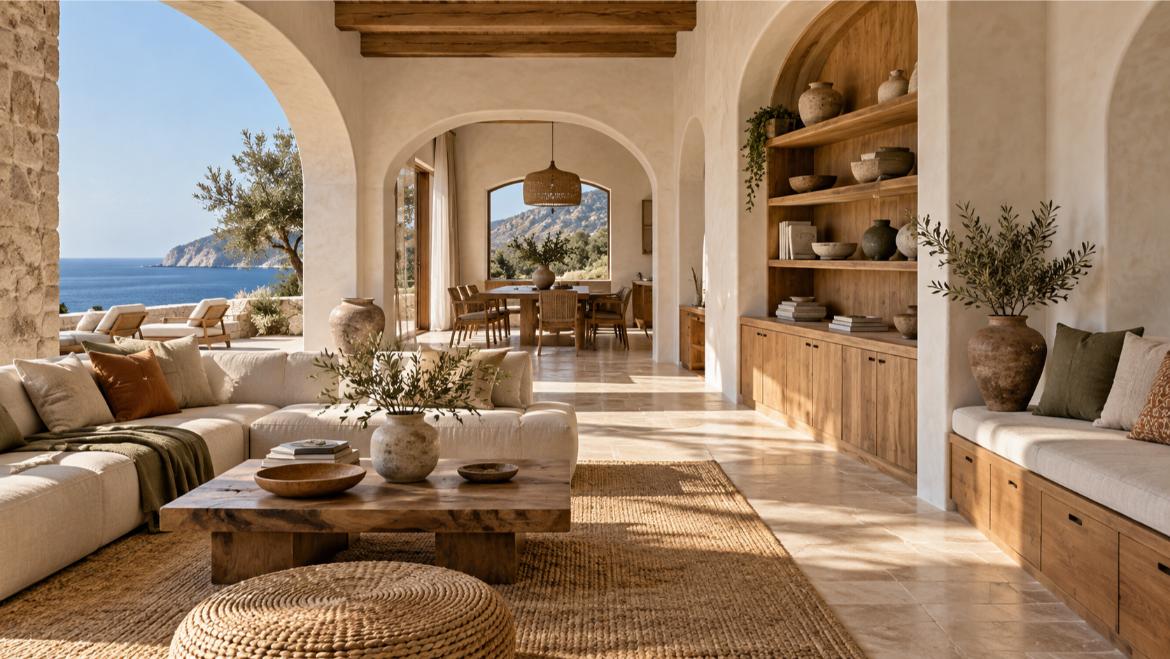
Wood has long played an important role in interior architecture, but its place in contemporary design goes far beyond tradition. Warm, adaptable and available in a wide variety of species and finishes, it can help define spaces, create visual continuity and bring character to even the most minimalist interiors.
In modern homes, wood is no longer limited to flooring or freestanding furniture. It can become an integral part of the architecture itself through built-in storage, wall panelling, bespoke kitchens, staircases, doors or made-to-measure furniture.
Used thoughtfully, wood creates interiors that feel both refined and comfortable while responding precisely to the way a space is used.
- 1 Wood as an Architectural Design Element
- 2 The Versatility of Wood in Contemporary Interiors
- 3 Using Wood to Structure Open-Plan Spaces
- 4 Creating Furniture Around the Space
- 5 Choosing Wood for the Intended Use
- 6 Finishes Transform the Character of Wood
- 7 Caring for Wooden Interiors
- 8 Wood and Bespoke Interior Design
- 9 A Material That Continues to Evolve
Wood as an Architectural Design Element
One of the greatest strengths of wood is its ability to adapt to very different architectural styles.
A pale, understated finish can complement a minimalist interior, while a richer grain or darker tone can create a stronger visual statement. Solid timber can provide depth and authenticity, while veneers make it possible to achieve elegant, consistent surfaces across large pieces of fitted furniture.
The result depends not simply on choosing wood, but on selecting the right material, proportions and finish for the project.
Connecting Furniture and Architecture
Bespoke woodworking can blur the traditional distinction between furniture and architecture.
A full-height bookcase can become part of a wall. A fitted wardrobe can follow the exact dimensions of a room. A kitchen island can structure an open-plan living area, while custom panelling can introduce rhythm and texture without overwhelming the space.
This approach is particularly effective in contemporary interiors, where visual simplicity often depends on carefully integrating storage and functional elements rather than leaving them exposed.
Instead of placing a standard piece of furniture into an existing room, bespoke design allows the furniture to respond directly to the architecture.
The Versatility of Wood in Contemporary Interiors
Few materials offer the same combination of structural, decorative and tactile qualities as wood.
Depending on the project, it can appear in a very discreet form or become the dominant feature of a room.
From Solid Wood to Veneered Surfaces
Wood can be used in many ways throughout an interior. Solid timber may be selected for a table, worktop, staircase or other feature where its depth and natural character can be fully appreciated.
Veneered panels can be particularly effective for fitted furniture, wardrobes and large wall compositions, allowing the grain to become part of the overall design.
Wood can also be combined with other materials rather than used in isolation. Lacquered surfaces, mineral materials, glass, metal and technical panels can all create interesting contrasts when incorporated with restraint.
The objective is not to fill an interior with wood, but to determine where it contributes most effectively to the overall composition.
Using Wood to Structure Open-Plan Spaces
Open-plan interiors create a sense of space and fluidity, but they also require careful planning. Without clear visual relationships between different areas, a large open room can quickly feel fragmented.
Wood can provide the continuity required to connect these spaces.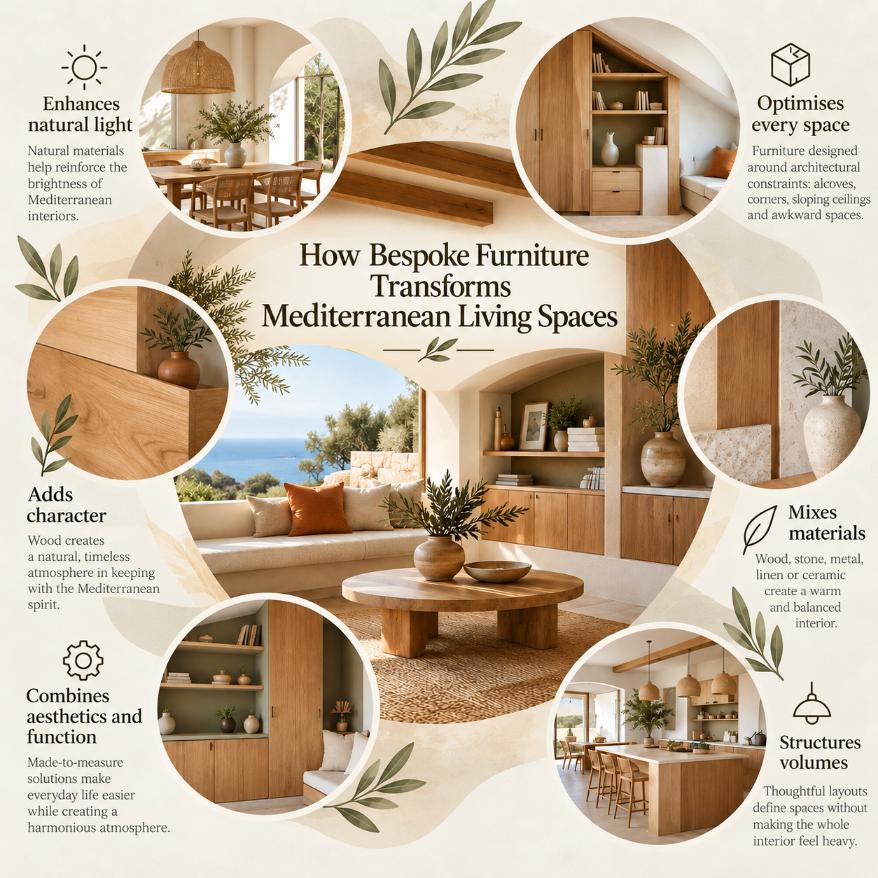
A kitchen and living area, for example, may share the same timber finish across cabinetry, shelving and selected furniture. Rather than creating identical surfaces everywhere, recurring materials and details establish a visual relationship between each zone.
Bespoke furniture can also help define individual functions without introducing solid partitions.
A shelving unit may subtly separate a dining area from a living room. A custom kitchen island can establish the transition between cooking and entertaining. Integrated storage can define circulation while keeping the space visually uncluttered.
For projects requiring this level of architectural integration, working with specialists in bespoke joinery and custom furniture, such as Ebenisterie Noirclerc, makes it possible to design each element according to the dimensions, technical constraints and intended use of the space.
Creating Furniture Around the Space
Standard furniture is designed around predetermined dimensions. Bespoke furniture works in the opposite direction: it begins with the room itself.
This distinction can transform the way an interior functions.
Making Use of Difficult Areas
Alcoves, sloping ceilings, irregular walls and narrow spaces can be difficult to furnish with standard products. A made-to-measure approach makes it possible to turn these constraints into useful features.
A recess can become fitted shelving. The space beneath a staircase can provide concealed storage. An entire wall can accommodate a combination of cupboards, open niches and integrated equipment.
Careful measurement is particularly important in such projects. Even small variations in walls, floors or ceilings can influence how fitted furniture needs to be designed and installed.
Integrating Everyday Technology
Modern homes also contain an increasing amount of technology, from televisions and audio equipment to charging points, lighting systems and household appliances.
Custom furniture makes it easier to accommodate this equipment discreetly.
Cable routes can be planned before production. Electrical sockets can be positioned where they are actually needed. Ventilation requirements and access panels can be incorporated into cabinetry rather than treated as an afterthought.
This technical integration contributes to the clean visual language associated with contemporary interiors.
Choosing Wood for the Intended Use
Not every type of wood is appropriate for every application.
The choice of timber or wood-based material should take into account where it will be installed, how frequently it will be used and the conditions to which it will be exposed.
A worktop, for instance, faces very different demands from a decorative wall panel. Bathroom furniture must account for moisture, while an entrance door may need to withstand variations in temperature and weather conditions.
The species, construction method and protective finish therefore need to be considered together.
This is especially important in regions such as the French Riviera, where strong sunlight, humidity and seasonal temperature variations can influence how materials age. A well-designed piece should take these environmental conditions into account from the outset.
Finishes Transform the Character of Wood
Selecting the material is only one part of the design process. The finish can dramatically change how wood looks, feels and performs.
Natural-looking finishes may highlight the grain and texture of the material, while stained finishes can deepen or alter its tone. Lacquers and paints can introduce colour while retaining the precision and craftsmanship of bespoke joinery.
Protective varnishes and other treatments may also be selected according to the intended use of the piece.
The right choice depends on the balance between appearance, durability and maintenance requirements.
Caring for Wooden Interiors
Well-designed wooden furniture and joinery can retain their appearance for many years, provided they receive appropriate care.
For routine cleaning, gentle methods are generally preferable. A soft cloth and a cleaning product compatible with the specific finish can prevent unnecessary damage to the surface.
Excessive moisture, abrasive products and unsuitable chemicals should be avoided, particularly when the exact nature of the finish is unknown.
Managing Moisture and Sunlight
Because wood is a natural material, environmental conditions can affect it over time.
Humidity changes may influence dimensional stability, while prolonged exposure to strong sunlight can gradually alter the colour of some species and finishes.
Good ventilation, suitable finishing systems and careful positioning can all contribute to preserving wooden elements.
For fitted furniture, these considerations should ideally be addressed during the design stage rather than after installation.
Repairing Rather Than Automatically Replacing
Another advantage of many wooden pieces is their ability to evolve over time.
Depending on their construction and finish, scratched, worn or aged surfaces may sometimes be sanded, refinished or repaired instead of replacing the entire piece.
This is particularly valuable for bespoke furniture that has been specifically designed for an interior and continues to fulfil its function effectively.
Wood and Bespoke Interior Design
The most successful uses of wood in contemporary architecture usually begin with the space rather than the material.
The dimensions of the room, available light, circulation, storage requirements and existing architectural details should all inform the design. Only then can the appropriate wood, finish and construction method be selected.
This approach allows a kitchen to follow the exact geometry of a room, a wardrobe to make full use of the available height or a living-room composition to combine storage, display areas and technology within a single coherent structure.
It also explains why bespoke joinery can have such a significant impact on an interior. The aim is not simply to produce an attractive piece of furniture, but to create something that belongs naturally within its surroundings.
A Material That Continues to Evolve
Wood remains relevant in modern interior architecture because it can be interpreted in so many different ways.
It works alongside both traditional craftsmanship and contemporary production techniques. It can provide warmth in a minimalist room, structure an open-plan interior or transform an awkward architectural feature into useful storage.
Above all, its success depends on thoughtful design.
When the choice of material, proportions, construction and finish responds to the architecture and to the people using the space, wood becomes much more than a decorative surface. It becomes an integral part of the interior itself — functional, enduring and unique to its setting.